
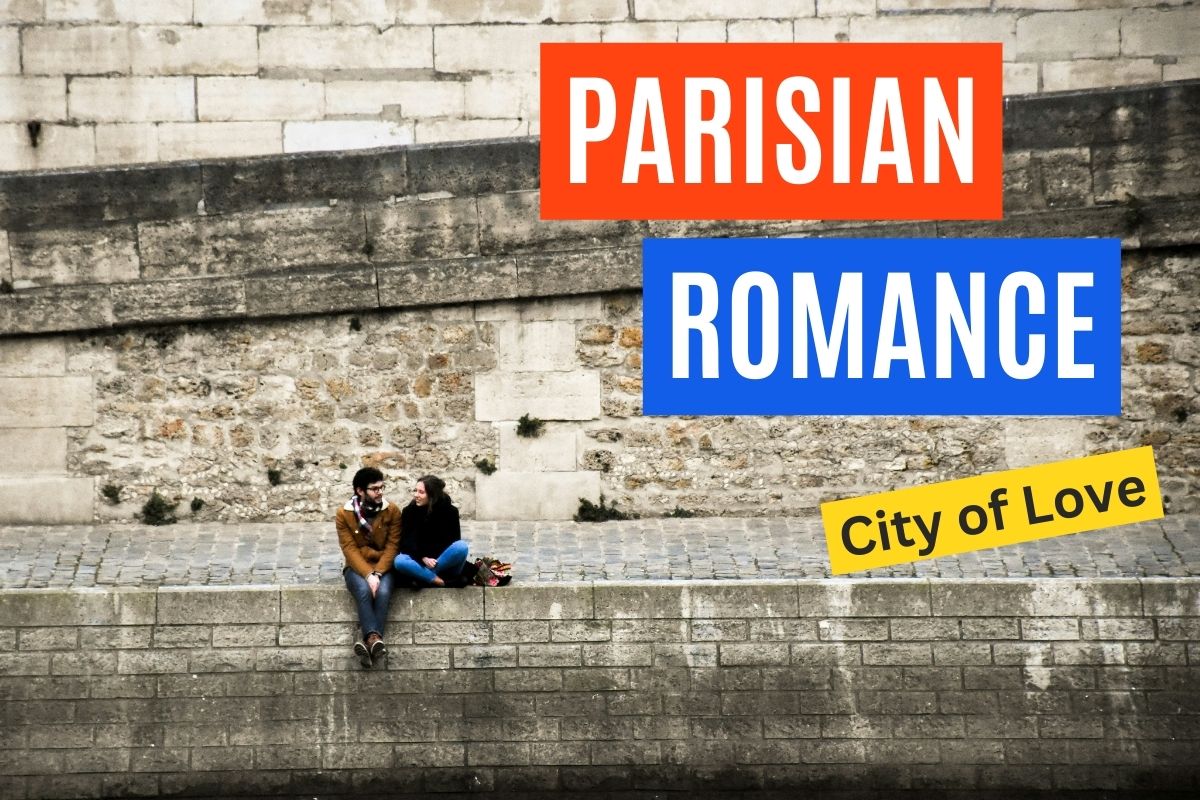
Paris is known as the City of Love and is the go-to destination for couples looking for a romantic getaway. The French capital’s association with love can be seen and felt across the city. But just what is it that makes Paris the romance capital of the world? Here we delve into some of the reasons why Paris is known as the City of Love.
1. A Medieval Love Affair and 19th-Century Courtesans
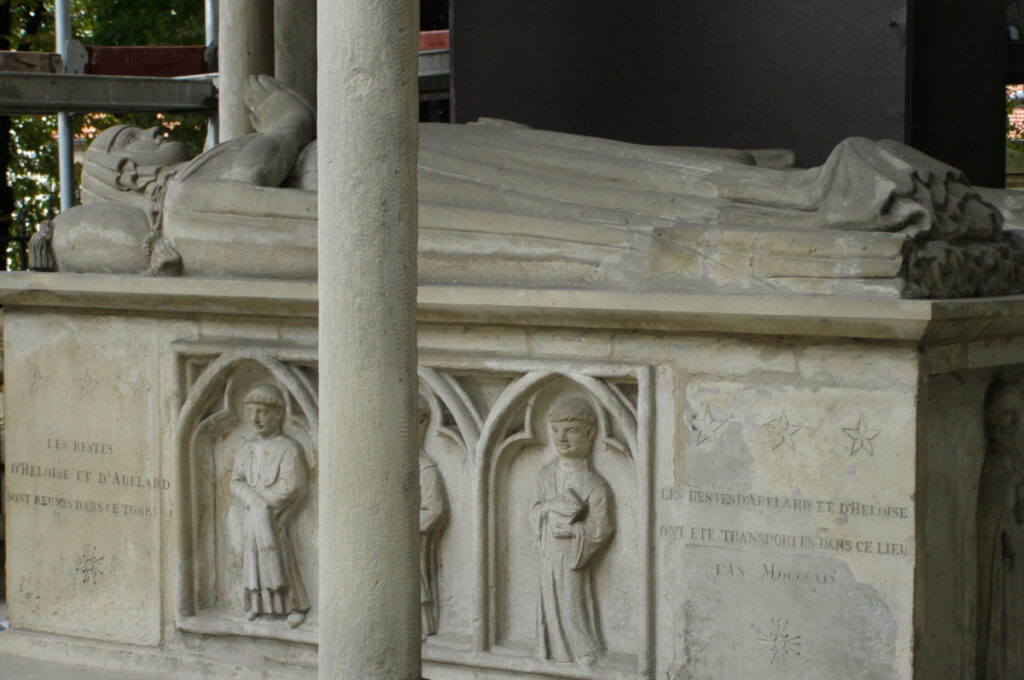
The origin of the city’s status as the City of Love is debatable. Some argue that it stretches back to the 12th century and the tragic tale of Abelard and Héloïse. Others say it stems from the city’s days as the sex capital of Europe in the 19th century.
The enduring love story of Abelard and Héloïse is a tale of forbidden love, forced separation, and tragedy. The couple lived in Paris in the 1100s and their story has lived on through the ages thanks to the correspondence the lovers exchanged. Despite being forced to live apart for much of their lives, they were reunited in death and today lie side by side at Père-Lachaise cemetery in Paris.
Several centuries later, Paris found itself at the center of a booming sex industry. In the 19th century, the city was awash with prostitutes and courtesans offering services to meet the ‘demand for love’. The working class and rich and powerful alike enjoyed such gratification. The French’s openness and laid back attitude to sex meant that it was quite common for respectable married men to be seen in public with women of the night.
Whether it was the tragic but romantic tale of ill-fated lovers, or the Parisians’ insatiable appetite for sex that first earned it the title of the City of Love, many other factors have contributed to this reputation over the years.
2. The French Language
French is often referred to as the Language of Love. This is thanks largely to its melodic sound. The order in which letters are arranged in French words makes them sound pleasing to the ear with a musical tone.
It is also one of the Romance languages, but, somewhat disappointingly, this is a reference to the language’s connection to Latin and Rome rather than love. It stands to reason that a city filled with people speaking the Language of Love would make it feel instantly romantic.
3. Art and Romanticism
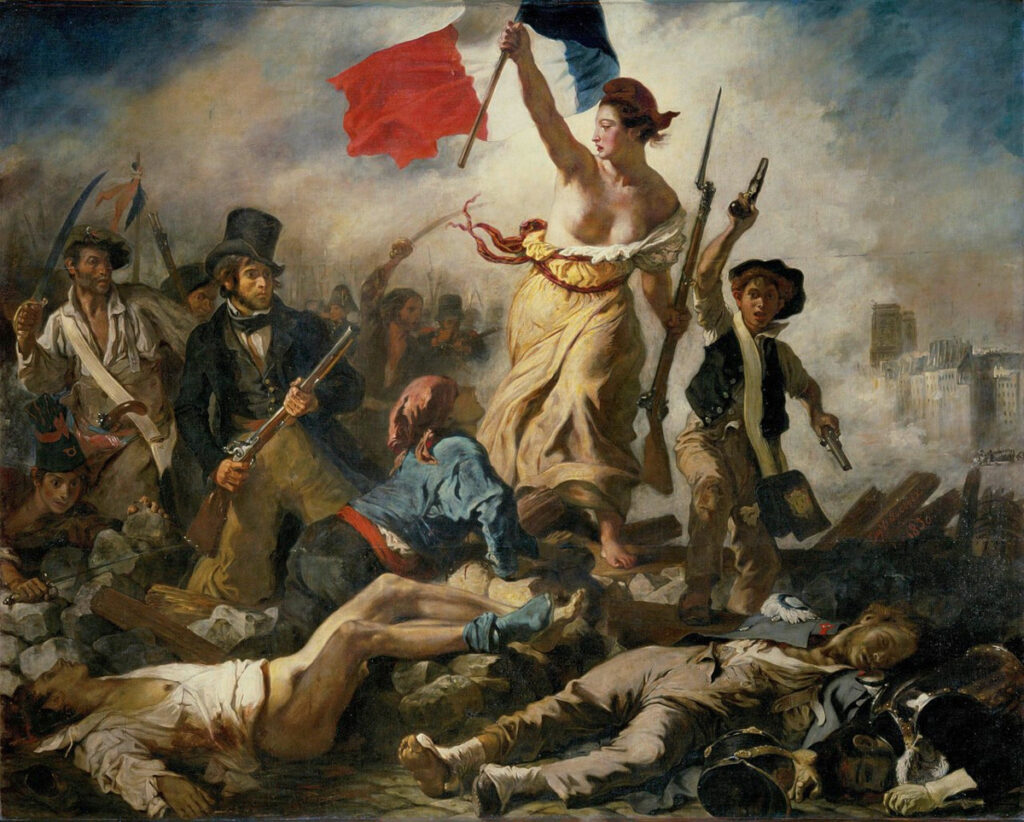
By the 19th century, Paris had already been the European center of culture for centuries. In the early 1800s, a new art movement was developing in France and across the sea in Britain. Romanticism was a response to the classicism that had prevailed until this point. In the aftermath of the 1789 French Revolution, many were disillusioned with the Enlightenment values of reason and order, which were the foundation of classicism.
Instead, artists began creating works that evoked emotion and celebrated imagination, individuality, and liberty. Two of the greatest Romantic paintings ever made are Théodore Géricault’s The Raft of the Medusa (1819) and Eugène Delacroix’s Liberty Leading the People (1830). Both paintings are on display at the Louvre Museum.
Romanticism flourished until the mid-19th century after which it gave way to Impressionism, a movement spearheaded by Paris-based artists. This new style of art focused on the effects of light and color. It also sought to capture feeling or experience and the softly painted scenes of nature or people at leisure exude an air of romanticism. Paris is home to some of the best collections of Impressionist paintings in the world, at the Musée d’Orsay and Musée de l’Orangerie.
4. Romantic Movies and TV Shows
The romance and allure of Paris has been captured on screen in countless movies and TV shows. For decades, directors have used the beautiful setting as a backdrop to romantic stories, further enhancing the image of Paris as the City of Love. Classic movies set in Paris include An American in Paris (1951), Funny Face (1957), and Gigi (1958). It has also been the stage for modern romances, such as Amélie (2001), Before Sunset (2004), and Midnight in Paris (2011).
One of the most successful TV shows about love, Sex and the City, used Paris as the setting for its finale where the main character moved to the French capital for love. Contemporary TV shows such as Emily in Paris further romanticize the city and introduce Paris as the City of Love to a new generation.
5. The Food Scene

French cooking is internationally renowned and where better to sample the cuisine than the country’s capital?
Paris is brimming with restaurants with picture-perfect romantic settings. Outside of the bistros and brasseries, Paris’ café culture is also picturesque. Couples sitting at small tables on cobblestone streets is the very image of Paris.
The French famously love food, so whether it’s a Michelin-starred meal or a coffee and croissant, Paris’ food scene is inextricably linked to passion.
6. The City of Light
The French capital is also known as the City of Light, which is a reference to both Paris’s links with Enlightenment and the fact that it was the first city in Europe to use street lighting.
The romantic nickname has a grisly origin story dating back to the 1660s when Paris was the murder capital of Europe. As part of the efforts to tackle the high crime rates and make Paris a safer city, the police initiated a street-lighting system. Thousands of candle-lit lanterns were installed across the city illuminating every main road after sundown. The police also encouraged residents to place candles or oil lamps in their windows to help light the streets.
By the end of the century a new era was dawning – the Age of Enlightenment. Paris was at the heart of this movement, adding a new meaning to the city’s moniker. The name remains a fitting title to this day. After dark, Paris is illuminated to spectacular effect and the city becomes a twinkling wonderland. Soaring above the skyline is the most impressively lit landmark of all, The Eiffel Tower. Covered with 20,000 sparkling lights, the Tower gives a dazzling display every evening. Paris’s nightly light show creates the most romantic of settings.
7. Beautiful Landmarks and Places to Propose
Part of Paris’ allure is its beautiful architecture and landmarks. These visually stunning locations make the perfect setting for the most romantic of gestures – a proposal. Historic structures such as the Eiffel Tower, the Sacré-Cœur Basilica, or the iconic Arc de Triomphe all provide dazzling locations to pop the question.
Other romantic settings include the Place Du Trocadéro (which has spectacular views of the Eiffel Tower), the beautiful Tuileries Garden, and the historic and artsy Montmartre district. The city’s beauty is part of what makes it so romantic, so it should be no surprise that it is one of the world’s most popular places to propose.
8. The Love Lock Bridge & Wall of Love
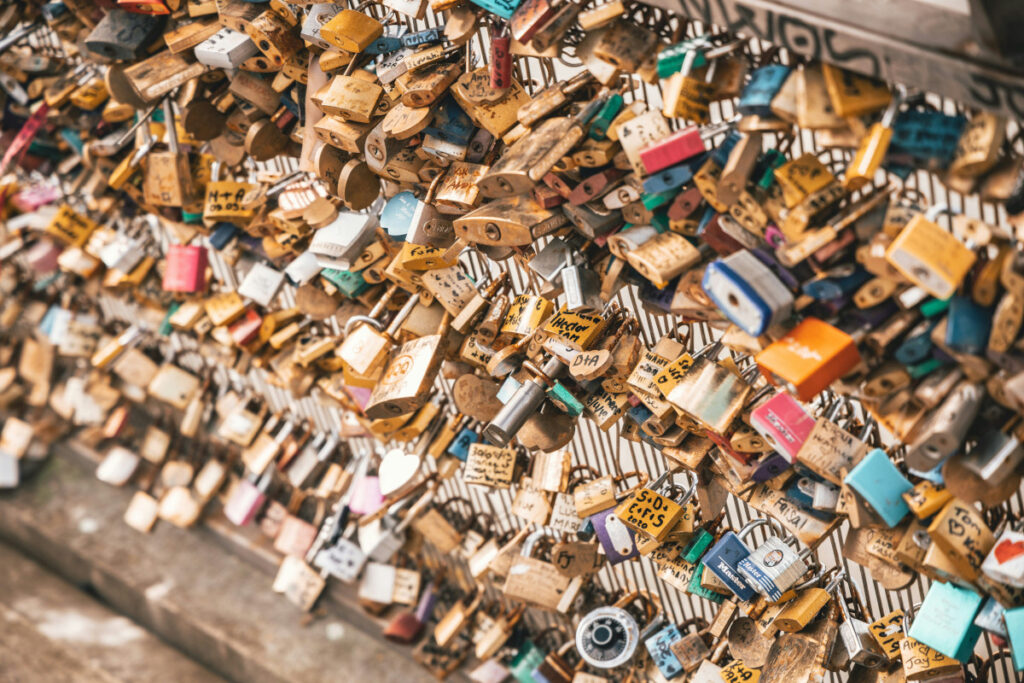
The French are not ones to be shy about professing their love and so it is only fitting that there are locations in Paris where couples can make a public declaration of love.
The Pont des Arts crosses the River Seine opposite the Louvre and is better known as the Love Lock Bridge. In 2008, couples began writing their names on a padlock, attaching it to the bridge, and then throwing the key into the river below as a symbol of their unbreakable love. The tradition became so popular that by 2014 there were around a million locks attached to the bridge. Sadly, the combined weight of these locks caused part of the railings to collapse and it is now forbidden to add new locks to the bridge. Despite this, the Pont des Arts remains a popular site for lovers to visit.
The other popular meeting place for lovers is the Wall of Love (Le Mur des Je T’aime). The wall is a work of art created by Frédéric Baron and Claire Kito and can be found in the Jehan Rictus Square in Montmartre. Spanning 416 square feet, it is covered with lava tiles with the words ‘I love you’ written in more than 300 languages. The wall stands as a symbol of devotion and the universal and unifying notion of true love.